
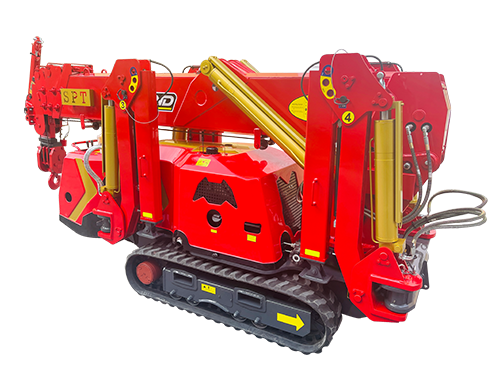
Precision lifting is becoming more important across Singapore’s construction, commercial, industrial and maintenance sectors. In a city where sites are often compact, access routes are narrow, and work is frequently carried out inside existing buildings, a spider crane in Singapore can help you complete lifting tasks that conventional cranes cannot manage efficiently.
This is especially true for projects in MRT stations, data centres, shopping malls, commercial buildings, industrial facilities and HDB upgrading works. These environments rarely offer the open space, ground access or setup conditions needed for large cranes. You may need to lift heavy materials through a doorway, place equipment on a rooftop, install glass panels along a façade or position mechanical components inside a plant room.
That is where the mini spider crane earns its place. Its compact body, extendable outriggers and strong lifting performance make it useful for tight spaces, indoor work, and complex construction sites. Before selecting one for your project, you need to understand how it works, where it performs best and what details affect safe lifting.
What Is a Mini Spider Crane?
A mini spider crane is a compact lifting machine designed for confined areas, restricted-access sites and projects where larger cranes cannot enter or operate safely. It combines a small footprint with stabilising outriggers and a telescopic boom, giving you lifting reach and capacity without needing a large setup area.
Understanding the Design of a Mini Spider Crane
A mini spider crane has a compact body that can pass through narrow access points and work where standard lifting equipment may be too bulky. Its extendable outriggers spread outward during lifting to improve balance and distribute load. Many models also come with flexible boom configurations for controlled lifting, positioning and placement in awkward spaces.
Why It Is Called a Spider Crane
The name comes from its spider-like outrigger stance. When deployed, the outriggers extend from the crane body to create a wider support base. This helps improve stability while keeping the main machine compact enough for worksites with restricted access.
How Mini Spider Cranes Differ from Conventional Cranes
Conventional cranes usually need wider access routes, larger setup areas and heavier mobilisation planning. A mini spider crane is easier to transport, position and operate in confined or indoor environments. It does not replace large cranes for heavy outdoor lifting, but it works well when space, access and precision are the bigger challenges.
Why Are Mini Spider Cranes Becoming Popular in Singapore?
A mini crane in Singapore is becoming more common because Singapore’s built environment keeps getting denser. Many projects now involve upgrading, retrofitting or maintaining existing buildings rather than working on wide-open sites. In these locations, the challenge is not only lifting weights. It is getting the equipment into position safely.
Mini spider cranes are useful in Singapore because they support precision lifting in restricted environments such as MRT stations, data centres, shopping malls, commercial towers, industrial facilities and HDB upgrading sites. When conventional cranes cannot be deployed due to space limitations, access issues or ground load restrictions, a compact crane can keep the work moving.
Increasing Urban Redevelopment Projects
Redevelopment projects often take place beside active roads, occupied buildings or tight site boundaries. A mini spider crane helps you carry out lifting work without needing a large crane setup area. This is useful for additions and alterations works, façade upgrades, interior structural works and equipment replacement projects.
Limited Space on Construction Sites
Singapore worksites rarely have generous staging areas. Materials, workers, vehicles and machinery often compete for the same limited space. A compact lifting machine helps reduce congestion because it can operate within tighter zones while still providing controlled lifting capability.
Growth of Building Renovation and Retrofitting Projects
Renovation and retrofitting works often happen inside completed buildings, where access routes may include doorways, corridors, loading bays or service areas. A mini spider crane can support lifting tasks in these environments without the disruption of a major external crane setup.
Demand for Precision Lifting in Commercial Buildings
Commercial buildings often require careful placement of glass panels, steel components, mechanical units, escalator parts or sensitive equipment. Precision matters because damage to surrounding finishes, services or occupied spaces can be costly. A mini spider crane gives you controlled lifting in areas where accuracy matters as much as capacity.
Key Advantages of Using a Spider Crane in Singapore
A spider crane in Singapore is useful when your project needs lifting power without taking over the entire site. Its main value lies in compact access, controlled placement and reduced disruption.
- Access to Narrow and Restricted Areas: Mini spider cranes can move through tighter access points, making them useful for indoor areas, back-of-house routes, narrow entrances and compact sites.
- Suitable for Indoor and Enclosed Environments: Their compact size allows them to work inside buildings, malls, factories, warehouses and transport facilities where larger cranes cannot operate.
- Reduced Site Disruption: Smaller setup requirements help reduce obstruction to nearby work areas, traffic flow, pedestrians and ongoing building operations.
- High Lifting Capacity Relative to Size: A mini spider crane can lift impressive loads for its footprint, making it useful when you need strength without large machinery.
- Enhanced Safety During Delicate Lifting Operations: Controlled movement supports precise placement of glass, steel, M&E components and other sensitive materials.
- Easy Transportation Between Job Sites: Mini spider cranes are easier to transport than larger cranes, which makes them suitable for contractors managing multiple short-duration lifting tasks across Singapore.
Where Are Mini Spider Cranes Commonly Used in Singapore?
A mini spider crane is most useful when a project needs compact access, stable lifting and precise load placement. In Singapore, these conditions appear across many construction, maintenance and upgrading environments.
- Commercial Building Construction: Useful for lifting steel sections, façade materials, equipment and structural components in tight urban sites.
- Glass Installation and Façade Projects: Supports controlled placement of glass panels, curtain wall sections and external finishing elements.
- Industrial Facility Maintenance: Helps lift pumps, motors, tanks, machinery parts and plant equipment inside factories or process facilities.
- Mechanical and Electrical Equipment Installation: Suitable for positioning chillers, switchboards, ducts, generators, compressors and other M&E components.
- Shopping Mall Renovations: Works well in enclosed areas with limited access, finished surfaces and active surrounding operations.
- Airport and Transportation Infrastructure Projects: Useful in spaces where access, safety, timing and movement control are tightly managed.
- Rooftop Equipment Placement: Helps position equipment in areas where large cranes may face access, setup or ground constraint issues.
How Mini Spider Cranes Solve Common Lifting Challenges
Mini spider cranes are not chosen only because they are small. They are chosen because they solve practical site problems that can delay lifting work, increase manpower requirements or complicate safety planning.
- Working in Confined Spaces
Confined spaces limit the movement of both machinery and workers. A mini spider crane can be positioned in tighter work zones while still providing lifting capability. This helps when you need to lift inside service yards, plant rooms, basements, atriums or narrow site corridors.
- Lifting Through Building Openings
Some projects require materials to be lifted through doors, windows, roof openings or façade gaps. A mini spider crane can support these lifts because it can be placed closer to the work area. This reduces the need for complicated rigging methods and improves placement control.
- Navigating Weight Restrictions
Existing floors, ramps and decks may not be designed for heavy equipment. Mini spider cranes have a lower footprint than many conventional cranes, but ground loading still needs proper assessment. The right model, outrigger setup and load calculation help you work within site limitations.
- Operating in Sensitive Indoor Environments
Indoor work often involves finished floors, nearby services, restricted noise levels and limited ventilation. Mini spider cranes can support controlled lifting in these spaces when proper protection, route planning and safety controls are in place. This is especially useful in malls, hotels, offices, hospitals and data centres.
- Reaching Difficult Elevated Locations
Some elevated areas are difficult to access with standard lifting equipment. Rooftops, mezzanine levels, atriums and internal voids may require compact machinery that can be moved into position before lifting begins. A mini spider crane offers a practical solution where external crane access is limited.
| Lifting Challenge | Traditional Crane | Mini Spider Crane |
| Indoor Access | Limited | Excellent |
| Narrow Entrances | Difficult | Easy |
| Rooftop Lifting | Complex setup | Efficient |
| Renovation Projects | Space constraints | Ideal solution |
| Precision Placement | Moderate | High accuracy |
Factors to Consider When Choosing a Mini Spider Crane
Choosing the right mini spider crane starts with the lift plan, not the machine catalogue. The model you select should match the load, site, access route and safety requirements.
Required Lifting Capacity
Check the actual load weight, including attachments, rigging gear and any lifting accessories. Do not choose based only on the maximum rated capacity. Crane capacity changes depending on boom length, working radius and outrigger position.
Maximum Working Height
Working height affects whether the crane can place the load safely at the required level. You need to consider both vertical height and horizontal reach. A lift that looks simple at ground level can become more complex once reach and clearance are included.
Site Accessibility Conditions
Review access width, doorway height, turning space, ramp gradient and travel route. If the crane must move through a building, check floor protection, lift access, loading bay dimensions and any overhead obstructions.
Ground Surface Requirements
Outrigger stability depends on the ground surface. Concrete slabs, steel decks, tiled floors, uneven ground and temporary platforms behave differently under load. You may need outrigger mats, load spreading calculations or engineering checks before lifting.
Indoor vs Outdoor Applications
Indoor projects may require attention to floor loading, fumes, ventilation, noise and surface protection. Outdoor work may involve weather, ground unevenness, wind conditions and access constraints. The crane should suit the working environment, not just the lifting weight.
Safety and Compliance Considerations
Review inspection records, operator competence, lifting plans, method statements and relevant Singapore workplace safety requirements. A mini spider crane may be compact, but it still performs lifting work that requires proper planning and control.
Safety Best Practices for Spider Crane Operations
Safe spider crane operation starts before the load leaves the ground. A compact machine can still create serious risks if the lift is poorly planned, the ground is unsuitable, or the operator lacks the right training.
- Check access routes, ground conditions, overhead obstructions, nearby workers, floor loading and load movement paths before mobilisation.
- Deploy outriggers according to the crane’s operating requirements and use suitable mats or supports where ground conditions demand it.
- Confirm the actual load weight, including rigging equipment, before lifting. Guesswork has no place in crane work.
- Use trained and competent operators who understand the crane model, load charts, controls and emergency procedures.
- Inspect the crane, wire ropes, hooks, outriggers, controls, safety devices and lifting accessories before operation.
- Follow applicable workplace safety rules, lifting procedures and site-specific requirements to protect workers and project continuity.
Mini Spider Crane vs Other Compact Lifting Equipment
| Equipment Type | Best Use Case | Space Requirement | Precision Lifting | Indoor Suitability | Key Limitation |
| Mini Spider Crane | Confined-space lifting and precise load placement | Low | High | High | Requires proper outrigger setup and lift planning |
| Mobile Crane | Large outdoor lifting projects | High | Medium | Low | Needs a larger access and setup area |
| Forklift | Material transport and pallet movement | Medium | Low | Medium | Not designed for suspended precision lifting |
| Boom Lift | Personnel access at height | Medium | Not applicable | Medium to High | Used for people access, not material lifting |
| Tower Crane | High-rise construction lifting | High | Medium | Low | Fixed setup and unsuitable for small confined tasks |
Frequently Asked Questions About Mini Spider Cranes
What is a mini spider crane used for?
A mini spider crane is used for lifting and placing materials in confined spaces, indoor areas, rooftops, renovation sites and restricted-access locations.
How much weight can a mini spider crane lift?
It depends on the model, boom length and working radius. Aly Energy’s SPT mini spider crane range includes models with capacities of up to 3 tons, 5 tons and 10 tons.
Can a spider crane be used indoors?
Yes. Spider cranes are commonly used indoors when access, floor loading, ventilation and safety controls are properly assessed before operation.
What industries commonly use mini spider cranes?
They are used in construction, commercial renovation, industrial maintenance, M&E installation, transport infrastructure, marine support and facility upgrading works.
Is a spider crane suitable for rooftop lifting projects?
Yes, if the rooftop structure, access route, load weight and outrigger setup are properly assessed. Rooftop lifts should always be planned with clear load and ground pressure checks.
How does a mini spider crane improve site safety?
It improves safety by allowing more controlled lifting in tight spaces, reducing manual handling and supporting precise load placement when operated by trained personnel.
What factors affect mini crane selection?
Key factors include lifting capacity, working height, site access, ground surface, indoor or outdoor conditions, load dimensions, operator requirements and safety documentation.
Why Businesses Choose Aly Energy for Mini Spider Crane Solutions in Singapore
At Aly Energy, we support companies that need compact lifting solutions for confined spaces, indoor work, and complex site conditions. Our SPT mini spider crane range includes models with capacities of up to 3 tons, 5 tons and 10 tons, giving you options for different project requirements.
- Reliable and Well-Maintained Equipment: We provide equipment that is checked and maintained to support safer, smoother lifting operations.
- Expertise in Complex Lifting Projects: Our team understands site constraints, load requirements and the practical challenges of lifting in restricted areas.
- Solutions for Restricted Access Locations: We support projects where conventional cranes may not be suitable, including indoor sites, renovation works and tight urban environments.
- Commitment to Safety and Operational Efficiency: We focus on proper equipment selection, site suitability and dependable support to help you reduce downtime and manage lifting risks.
- Support for Construction, Industrial and Maintenance Projects: We serve a wide range of sectors, including construction, marine, offshore, aviation, recycling and industrial works. Aly Energy also offers broader equipment rental and support services, including cranes, boom lifts, scissor lifts, telehandlers, generators and tower lights.
Conclusion
A spider crane in Singapore can make difficult lifting work more manageable when space, access and precision are major concerns. For Singapore projects involving indoor works, building upgrades, rooftop placement, façade installation or restricted-access locations, a mini spider crane offers a practical way to lift safely without relying on large crane setups.
The right equipment choice still matters. You need to consider load capacity, working height, ground conditions, access routes and safety requirements before selecting a crane. Aly Energy can help you assess the right mini crane in Singapore, including mini spider crane rental and support for complex lifting environments.
Visit https://www.aly.com.sg/mini-spider-crane/ to explore our compact lifting solutions.